Unless you have been told that it’s there, it’s very easy to miss, as there is only footpath access and no signage, but tucked behind houses on The Green, Side Steet and Bottom Road is the church yard of St James.
It seems strange that a tiny place like Allington could have had two parish churches, but in the past the present village spanned the boundary between two parishes – that of East Allington and that of West Allington, and both had a church. West Allington was a parish in its own right under the patronage of the Lord Chancellor, but East Allington Parish was a chapelry ie a subdivision of Sedgebrook parish.
The parish boundary meandered through the village. Most of the village today is in what was East Allington, whilst the Hall, Holy Trinity, Allington Manor and houses further along Bottesford Road were in West Allington. Interestingly the border between east and west would have cut through the middle of Allington Gardens, and Park Road and Avenue.
Even the Doomsday Book records there being two churches in Allington – one belonging to Robert of Todeni and the other to Berengar of Todeni, probably Robert’s son, both of whom had been given Manors in Allington by Willam the Conqueror. Robert’s church was almost certainly where Holy Trinity is, which was in the parish of West Allington. It’s not known exactly where Berengar’s church was, but by the mid thirteenth century there was a small chapel on the site of St James’s, as remnants were found when the church was later demolished. As East Allington was a chapelry, St James was referred to as a Chapel of Ease.
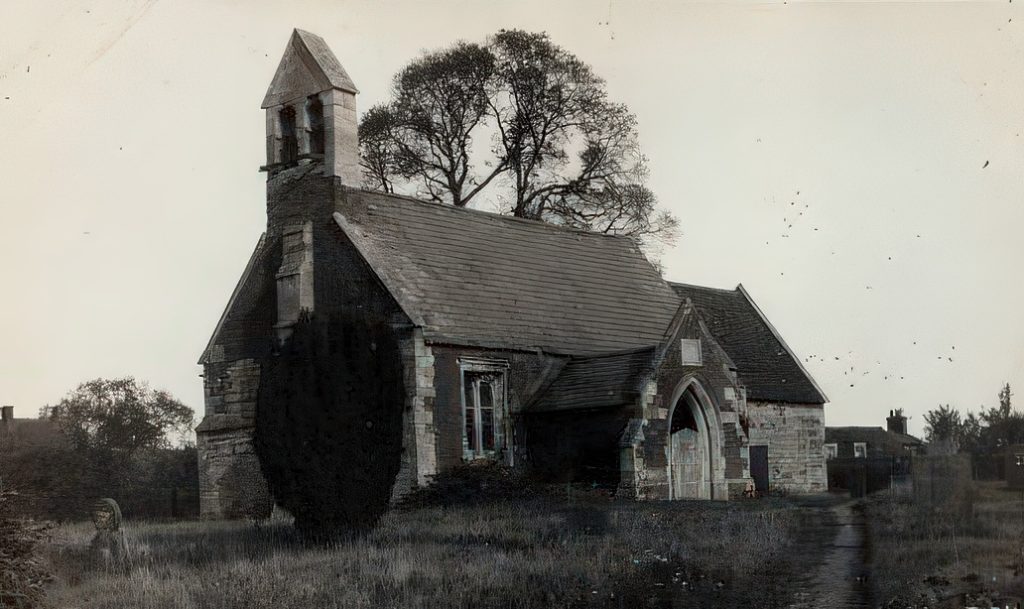
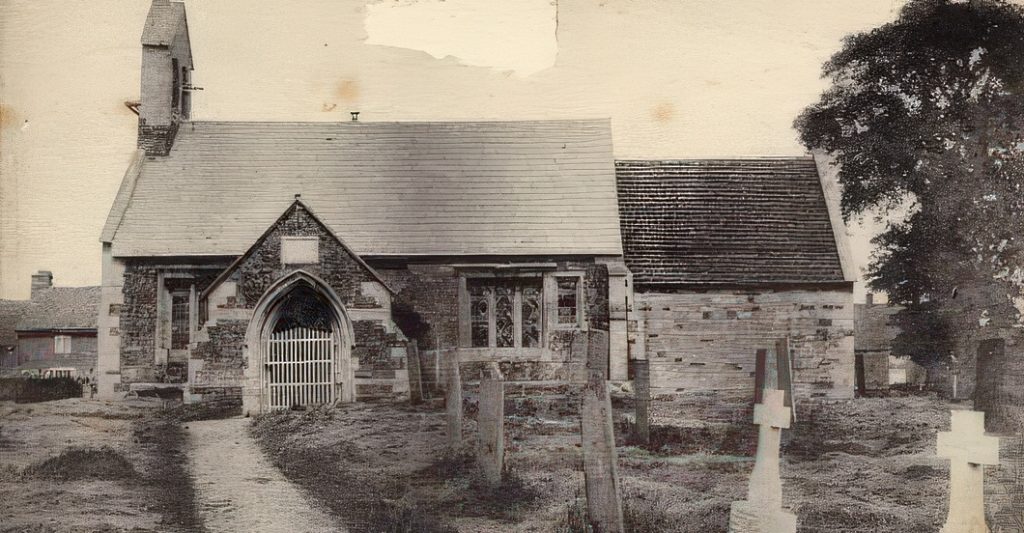
It’s recorded that it was a small plain stone building with Early English and Perpendicular features, consisting of a cancel, nave, south porch and a bellcote with two bells. There was seating for 70. Records show that the building was restored in 1855, and much of the costs were paid by John Earle Welby.
Two rectors were established in Sedgebrook, one to care for St Lawence’s in Sedgebrook and the other to the chapel in East Allington. The latter wasn’t a difficult job – a few services every week, but it wasn’t always done, and in 1383 the inhabitants of East Allington complained to the court that the Rector of Sedgebrook was taking tithes but not providing a resident chaplain. They won and were awarded costs of £9 6s 8d.
In 1896, the parish of East Allington was separated from Sedgebrook, and East and West Allington became one. By the 1940s St James had fallen into disrepair. Although there are records of baptisms up to 1929 and burials to 1940, there hadn’t been regular services for many years, and Mr Charles Pelham Welby wrote to the church authorities saying it was an eyesore in the village. Holy Trinity also needed money spent on it at the time as roof needed repair. This church was always given priority in the village because it was bigger and closer to the Hall, so much to the dismay of many villagers, St James was demolished in early 1951. Some of the stone was used at Holy Trinity, but the bells were taken to Sedgebrook for storage, and the font to St Michael’s in Waddington.
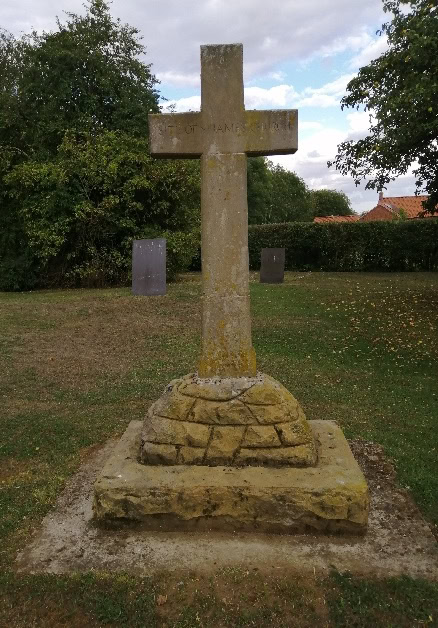
A cross was erected to mark the site of St James’ altar at the cost of £89 5s 5d, but someone made the awful mistake of dedicating it to St Andrew! Now St James is a lovely peaceful oasis in the middle of the village, where St James’ day is often marked with an open-air Songs of Praise.
(The author believes the content to be accurate, but if you have more information or you think there are errors, please email judith.baron29@btinternet.com )

